
What if the most dangerous part of scalp micropigmentation isn’t the needle, but a technician who treats your head like a stencil? You’ve likely felt a tightening in your chest while looking at “botched” photos, wondering if you’re about to trade one insecurity for an even more visible one. It’s completely normal to feel anxious about a permanent change to your appearance. When exploring smp regrets and how to avoid them, the reality is that dissatisfaction rarely stems from the technology itself. It comes from a lack of bespoke artistry. You want a restoration that looks like a natural, receded hairline matching your age, not a dark, solid line that screams for attention.
You’re about to learn exactly how to bypass the common pitfalls that leave others seeking removal. We’ll break down the technical red flags of poor pigment depth and the artistic errors of “helmet head” designs. This guide reveals how to secure an undetectable result using 2026 hyper-realistic standards and finer needle protocols. We’ll also cover the regulatory essentials for Sacramento artists, ensuring your investment leads to a profound emotional upgrade rather than a life-altering mistake.
Key Takeaways
- Identify the critical gap between “natural follicle mimicry” and “visible ink” to ensure your result provides freedom rather than a need for concealment.
- Learn to recognize technical red flags like the “Blowout” effect and “Blue-Grey Shift” caused by improper pigment depth and dilution.
- Avoid the “helmet look” by prioritizing age-appropriate hairline designs that evolve naturally with your facial structure.
- Follow a 5-step prevention roadmap to understand smp regrets and how to avoid them through artist vetting and healed result audits.
- Discover the standard of “Invisible Artistry” that ensures your restoration looks entirely organic under any lighting condition.
Understanding SMP Regrets: Why Some Results Fall Short of Perfection
Regret isn’t just a feeling; it’s the visible gap between the promise of a natural hairline and the reality of ink that looks artificial. For many, the decision to undergo scalp micropigmentation (SMP) is a reach for freedom. It’s a way to stop hiding under hats or checking mirrors every ten minutes. When that result falls short, the emotional weight is heavy. Instead of liberation, you’re left with a new reason to conceal. This psychological burden can be more taxing than the original hair loss because it feels permanent. Understanding smp regrets and how to avoid them starts with recognizing that a flawless outcome relies on three pillars. You need technical precision to avoid blurring; bespoke artistic vision to match your facial structure; and diligent aftercare to protect the pigment. Most of these disasters are entirely preventable. They don’t happen because the technology fails. They happen because the practitioner fails to treat your scalp as a unique, living canvas.
The ‘Tattooed’ Anxiety: Fear of the Unnatural Look
The most common fear we hear is the “Lego head” effect. You don’t want a solid block of dark paint that looks like it was stamped onto your forehead. This anxiety is valid because traditional body tattooing uses different equipment, deeper needle depth, and pigments that aren’t designed for the scalp. Specialized scalp micropigmentation for men uses ultra-fine needles to replicate individual follicles with microscopic accuracy. It’s about subtlety and the deliberate space between the dots. If you’re worried about looking like a caricature, our ultimate guide for men explains how we achieve that soft, natural transition that fools even the closest observers. We focus on the “invisible” finish where the work disappears into your existing hair.
Mismatched Expectations vs. Reality
Low-cost clinics often over-promise immediate results to close a sale. This creates a dangerous mismatch between what you see in a filtered photo and what you see in the mirror. True scalp micropigmentation is a layered, progressive enhancement of density that requires patience and precision. It’s a three-session journey where we build depth and realism over several weeks, allowing the skin to heal between sittings. If an artist claims they can “fix everything” in one afternoon, that’s a significant red flag. We define SMP as a methodical process of follicle mimicry that respects the skin’s natural healing cycle. By choosing a specialist who prioritizes this progressive approach, you ensure your investment leads to a result you’ll be proud to show off in any light, from the office to the gym.
The Technical Roots of Dissatisfaction: Depth, Pigment, and Color Theory
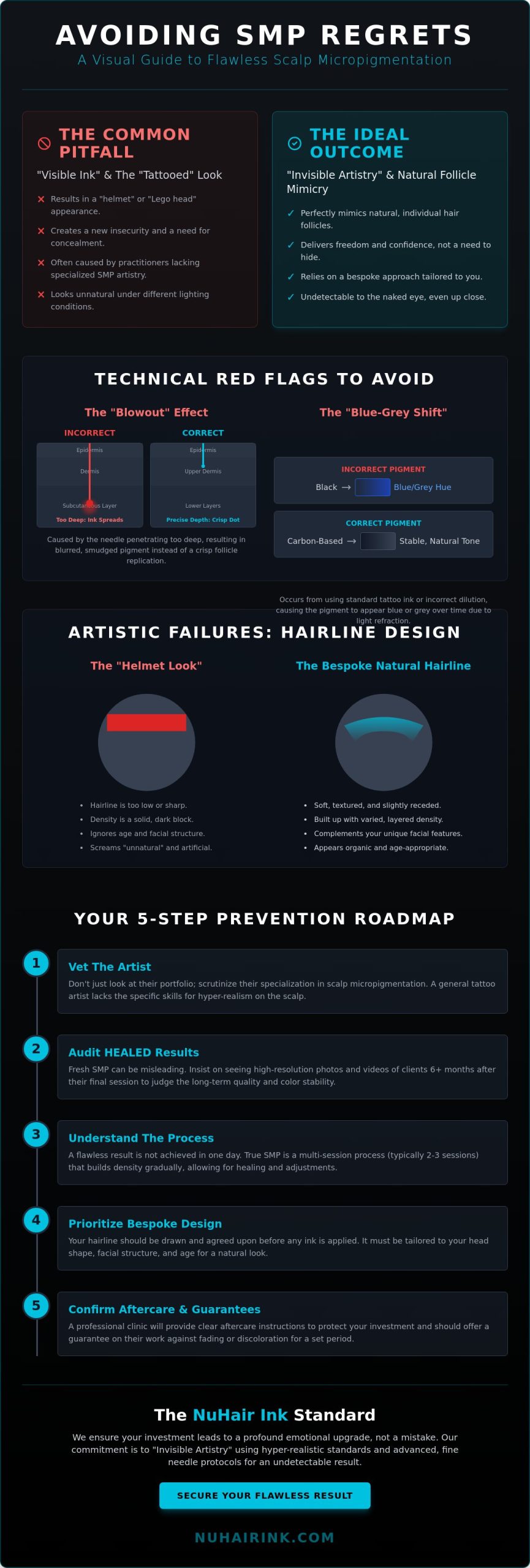
Technical failure in scalp micropigmentation isn’t a matter of bad luck; it’s a consequence of bad physics. When you study smp regrets and how to avoid them, you’ll find that the “Blowout” phenomenon is the most frequent culprit. This happens when a technician lacks the precision to stay within the upper dermis. If the needle penetrates too deep into the subcutaneous layer, the pigment spreads uncontrollably. It’s like a drop of ink hitting a wet paper towel. Instead of a crisp, microscopic dot that mimics a hair follicle, you’re left with a blurred, smudged mess that looks nothing like real hair. Precision is everything. The needle must deposit pigment at a specific depth where the skin’s immune system can’t easily break it down, yet high enough to prevent migration.
The “Blue-Grey Shift” is another technical nightmare. This occurs due to the Tyndall effect, where light refracts through the skin and changes the appearance of the pigment color. While the risks of scalp micropigmentation include clinical issues like infection, the aesthetic risk of an unnatural hue is far more common. If a practitioner uses standard tattoo ink or fails to dilute the pigment correctly for your skin tone, the result will eventually turn a cold, artificial blue. Specialized SMP needles are also critical. Standard tattoo needles are far too large; they create dots that are double the size of a natural follicle, leading to a crowded, “inked-on” appearance.
Pigment Migration and the ‘Blurred’ Effect
Your skin type plays a massive role in how well the pigment settles. Oily skin, for instance, can cause pigment migration if the artist doesn’t adjust their technique. The excess sebum can soften the dots, leading to a “halo” effect around each deposit. At NuHair Ink, we use high-grade, carbon-based pigments specifically formulated to resist this shift. These pigments are designed to stay true to their original tone, ensuring your results remain crisp and organic for years. If you’re ready to see how precision meets artistry, explore the bespoke SMP options available for your specific hair loss pattern.
The Science of Follicle Mimicry
True follicle mimicry requires a “Micro-dot” technique that respects natural spacing. We don’t just fill in space; we mirror the random, organic density patterns of a real scalp. This is achieved through a layering approach. By building density over three sessions, we create a three-dimensional effect that prevents the “flat” look common in low-quality work. The critical difference lies in the upper dermis. This layer is the “sweet spot” for pigment retention. Successfully placing ink here ensures that the epidermis can shed naturally without taking your new hairline with it, resulting in a look that is both permanent and undetectable.
Artistic Failures: Avoiding the ‘Helmet Look’ and Unnatural Hairlines
Technical perfection doesn’t matter if the final design looks like a wig. The “Helmet Look” is a primary source of dissatisfaction for many. It happens when a hairline is positioned too low, drawn too straight, or packed too densely. It creates a harsh, artificial barrier rather than a natural transition. When researching smp regrets and how to avoid them, you’ll see that the most common complaint on forums is a “drawn-on” appearance. A master artist avoids this by utilizing a “Broken Line” technique. This involves creating a soft, feathered edge that mimics how hair naturally grows. Natural hair doesn’t stop in a perfect row; it features staggered follicles and varying density at the margins. Replicating this randomness is what separates a meticulous specialist from a basic technician.
Portfolio Red Flags: What to Look for Before Booking
Don’t be fooled by high-contrast photos taken seconds after a session. Fresh work always looks crisp, but healed results reveal the true skill of the artist. Pigment settles and expands slightly over time. You must demand to see photos of work that is at least six months old to judge the final outcome. Choosing a qualified practitioner requires a discerning eye for consistency. Look for studio backgrounds that match across the entire portfolio. Stolen photos are a rampant issue in low-cost clinics. If the lighting and environment change in every shot, walk away. Avoid portfolios that rely on heavy filters or extreme close-ups that obscure the actual dot work. A transparent artist shows their work in various lighting conditions to prove its authenticity.
The Bespoke Design Process
Your face shape and bone structure should dictate your hairline, not a plastic stencil. A 45-year-old man with a perfectly straight, razor-sharp hairline looks unnatural. It draws the wrong kind of attention. We follow the “Age-Appropriate” principle, designing hairlines that feature a slight, natural recession. This ensures the look remains believable as you age. A mature hairline provides a more sophisticated and authentic profile. Through a combination of feathering and stippling, we create a 3D illusion of depth that matches your existing hair color and skin tone. NuHair Ink prioritizes a conservative approach during the first session. We start higher and lighter, allowing you to live with the look before we refine the density in subsequent sittings. This partnership ensures you never feel the “tattooed” anxiety discussed earlier. Customization is the only way to achieve a result that is truly yours, providing the psychological restoration you deserve.
Your Prevention Roadmap: 5 Steps to Securing a Flawless Result
Securing a transformative result isn’t a matter of chance; it’s the product of a disciplined selection process. While technical errors and artistic mismatches cause smp regrets and how to avoid them remains the priority, the journey starts with your due diligence. You aren’t just buying a service. You’re choosing a partner for a permanent aesthetic upgrade. This roadmap ensures you move from anxiety to absolute confidence by vetting every variable before the needle ever touches your skin.
- Verify SMP-Only Specialization: Avoid generalists who offer scalp work as a side service. You need a specialist whose entire career is dedicated to the unique behavior of scalp tissue and specialized pigments.
- Conduct a Healed Results Audit: A fresh photo only tells half the story. Demand to see high-resolution images of work that is at least six months to a year old to ensure the dots haven’t blurred or shifted in color.
- Test the Artist’s Integrity: During your meeting, propose an unrealistic hairline. A master artist will prioritize your long-term look over a quick sale, willingly saying “no” to designs that won’t age gracefully.
- Optimize Your Canvas: Start moisturizing your scalp daily and exfoliating twice a week for at least seven days before your session. Healthy, hydrated skin holds pigment with far more precision than dry, flaky tissue.
- Commit to Post-Treatment Discipline: The first ten days are critical. Following the non-negotiable rules of recovery prevents premature fading and ensures the pigment settles perfectly in the upper dermis.
The Critical Consultation: Questions You Must Ask
Don’t be afraid to dig into the technical details. Ask your practitioner exactly what pigment brand they use and why they chose it for your specific skin tone. A professional should be able to explain their dilution ratios and how they adjust their technique for different ethnicities. Ask if you can speak with a previous client who is three or more years post-treatment. Their experience with long-term fading will tell you everything you need to know about the artist’s technical longevity. If you want to experience this level of transparency firsthand, book a bespoke consultation with our team today.
The Sacramento UV Factor: Protecting Your Investment
Living in Northern California presents a unique challenge for scalp micropigmentation longevity. The intense Sacramento sun is the primary enemy of pigment. UV rays break down the ink over time, leading to premature fading if you aren’t vigilant. We recommend a high-quality SPF 50+ specifically formulated for the face and scalp to be applied whenever you’re outdoors. This isn’t just about skin health; it’s about preserving the crispness of your follicle mimicry. For a step-by-step breakdown of how to navigate the local climate during your healing phase, refer to our complete aftercare guide. Protecting your investment ensures your results remain undetectable and vibrant for years to come.
The NuHair Ink Standard: Bespoke Scalp Micropigmentation in Sacramento
Choosing a studio shouldn’t feel like a gamble. At NuHair Ink, Nhu Le has established a standard of care that treats scalp micropigmentation as a bespoke art form rather than a routine cosmetic task. This artist-first approach is the foundation of our “Invisible Artistry” promise. We believe the best work is the work nobody notices. Whether you’re under the harsh, unforgiving LED lights of a gym or the direct afternoon sun in Roseville, your results will appear entirely organic. By focusing exclusively on scalp micropigmentation, we maintain a level of world-class specialization that generalist studios simply cannot match. We’ve performed over 3,500 procedures, earning a consistent 5-star reputation for precision and empathy. When you understand the technical causes of smp regrets and how to avoid them, you realize that choosing a specialist with this depth of experience is your greatest safeguard.
Our local advantage goes beyond our Sacramento and Roseville roots. It’s about being your partner throughout the entire journey of psychological restoration. We don’t just provide a service; we offer a life-altering emotional upgrade. This proximity allows for meticulous follow-up care and personalized adjustments that ensure your investment remains flawless for years. We take pride in being perfectionists because we know that for you, this isn’t just about ink. It’s about regaining the confidence to live without concealment.
Our ‘Natural First’ Philosophy
We avoid the “shock” of an immediate, heavy change by building density slowly and methodically. This progressive layering approach allows the pigment to settle naturally, giving us the opportunity to refine the shade and texture in each subsequent session. Every hairline we design is a bespoke creation tailored to your unique facial anatomy and bone structure. We don’t use templates. We use an artistic eye to ensure the transition from skin to “follicle” is seamless. For clients dealing with the aftermath of previous surgeries, our expertise in scar camouflage provides a way to finally hide FUE or FUT marks, integrating them perfectly into a new, dense look.
Ready for a Transformation Without Regrets?
Your journey from insecurity to self-assurance starts with a single, transparent conversation. We invite you to explore our portfolio of real Sacramento clients who have already experienced the NuHair Ink difference. There’s no pressure and no generic sales pitches. We’ll sit down with you to analyze your specific hair loss pattern and design a roadmap that prioritizes your long-term satisfaction and aesthetic safety. You deserve a result that looks as good in five years as it does on day one. Take the first step toward a permanent, undetectable solution today.
Book Your Free Consultation at NuHair Ink Today
Take Control of Your Aesthetic Future
Your journey toward a restored hairline doesn’t have to be clouded by anxiety. By prioritizing technical depth control and age-appropriate artistic design, you can secure a result that is entirely undetectable. True success in scalp micropigmentation comes from a partnership with a specialist who treats your scalp as a unique canvas rather than a mechanical task. When you focus on smp regrets and how to avoid them, the path leads directly to specialized expertise and a commitment to progressive, layered density.
NuHair Ink stands as a specialized SMP-only clinic dedicated to world-class follicle mimicry. Led by master artist Nhu Le, our studio has produced hundreds of healed Sacramento results that look organic even under the most challenging lighting. We invite you to move beyond the fear of the “tattooed” look and toward a profound emotional upgrade. You deserve the freedom that comes with a flawless, natural appearance. We’ve seen how this procedure changes lives, and we want that same confidence for you.
Book Your Free SMP Consultation in Sacramento and start your transformation with absolute peace of mind. We’re here to ensure your investment leads to a lifetime of self-assurance without the need for concealment.
Frequently Asked Questions
Can bad scalp micropigmentation be fixed or reversed?
Yes, bad scalp micropigmentation can often be corrected or lightened through specialized techniques. If the work is too dark or blurred, laser removal is the most effective way to clear the canvas before starting over. In cases of minor artistic errors, a master artist can sometimes use camouflaging to soften harsh hairlines. It’s always easier to achieve a flawless result from the start, but professional correction can help you move past a previous mistake.
Does SMP turn blue or green like a traditional tattoo?
High-quality scalp micropigmentation will not turn blue or green over time. These unnatural color shifts are usually caused by the use of traditional tattoo inks or improper needle depth. Specialized SMP pigments are carbon-based and designed to fade into lighter shades of the original grey or black. Using the correct dilution for your skin tone ensures the result remains organic and believable throughout its entire lifespan.
How do I know if an SMP artist in Sacramento is actually qualified?
A qualified Sacramento artist must hold a professional license and a current Bloodborne Pathogens Exposure Control certification. Beyond legal requirements, look for a specialist who focuses exclusively on scalp work rather than a generalist. Demand to see a portfolio of healed results that are at least six months old. Consistency in lighting and studio backgrounds in their photos is a hallmark of a transparent, high-end practitioner.
What happens if I continue to lose more hair after my SMP treatment?
If you continue to lose hair, we simply add more density to the new thinning areas during a touch-up session. SMP is a flexible solution that evolves with you. A skilled artist will blend the new pigment seamlessly into your existing treatment, ensuring the transition remains invisible. This adaptability is one of the reasons why smp regrets and how to avoid them are manageable with the right long-term partner.
Why do some SMP results look like a solid ‘helmet’ instead of hair?
The “helmet look” occurs when an artist creates a hairline that is too straight, too low, or too densely packed. Natural hair doesn’t grow in a perfect, solid line; it has a soft, staggered transition. Avoiding this requires a “broken line” technique that mirrors organic follicle patterns. When an artist uses a “cookie-cutter” template instead of customizing the design to your facial anatomy, the result looks artificial.
Is it normal for SMP to fade significantly after the first session?
It is entirely normal and expected for your pigment to fade after the first sitting. Your skin’s immune system will naturally attempt to shed the new pigment during the initial healing phase. This is why we treat SMP as a layered, multi-session process. The first session sets the foundation, while the second and third sessions build the permanent density and three-dimensional realism required for a flawless finish.
How often will I need touch-ups to keep my SMP looking fresh?
Most clients benefit from a touch-up every 3 to 5 years to maintain peak crispness and color. While the treatment is permanent, the pigment will naturally lighten over time due to skin cell regeneration and UV exposure. You can maximize the longevity of your results by consistently applying SPF 50+ to your scalp. This simple step protects the pigment from breaking down prematurely under the intense Northern California sun.
What should I do if I already regret my SMP from another clinic?
If you’re unhappy with work from another clinic, the first step is a professional evaluation of the pigment depth and color. We specialize in assessing smp regrets and how to avoid them in the future by creating a bespoke correction plan. Depending on the severity, we may recommend a session to soften the existing work or suggest removal. Your goal is psychological restoration, and we’re here to help you find that path.