
What if the blue tint staring back at you in the mirror wasn’t a permanent mistake, but simply a technical hurdle on your path to a perfect hairline? You chose scalp micropigmentation to regain your confidence, not to trade thinning hair for an unnatural, gray-blue hue. It’s exhausting to feel like you have to hide your head under a hat again, especially after investing your trust in a procedure that promised realism. You aren’t alone in this anxiety, and your fear that the damage is irreversible is a completely normal reaction to a botched application.
This article explains exactly what to do if smp turns blue and how professional correction techniques can restore the organic, undetectable look you originally wanted. We’ll explore why pigment changes color and the precise, methodical phases required to lift the unwanted tint and replace it with authentic, follicle-like impressions. You deserve a result that looks entirely organic, and the journey toward psychological restoration starts with understanding your options for a clean, professional fix.
Key Takeaways
- Identify the technical errors, like improper needle depth and light scattering, that cause your scalp micropigmentation to lose its organic tone.
- Distinguish between healthy, charcoal-toned fading and the unnatural blue or gray hues that indicate a need for professional intervention.
- Gain clarity on what to do if smp turns blue, including the importance of a phased correction plan to restore a natural look.
- Learn why laser removal is often a necessary first step to clear deep, migrating ink before applying new, precise follicle impressions.
- Discover how to select a meticulous correction specialist who prioritizes visual invisibility and long-term aesthetic success.
Understanding Why Scalp Micropigmentation Can Turn Blue or Gray
Seeing your scalp change from a crisp, clean look to a hazy blue can be devastating. This phenomenon, often called blueing, happens when the pigment in Scalp micropigmentation (SMP) appears cool-toned, blue, or grayish over time. It isn’t just a trick of the light. It’s a technical error. When you’re searching for what to do if smp turns blue, the first step is understanding that this isn’t your fault. It’s a result of a practitioner’s lack of precision or poor material choice.
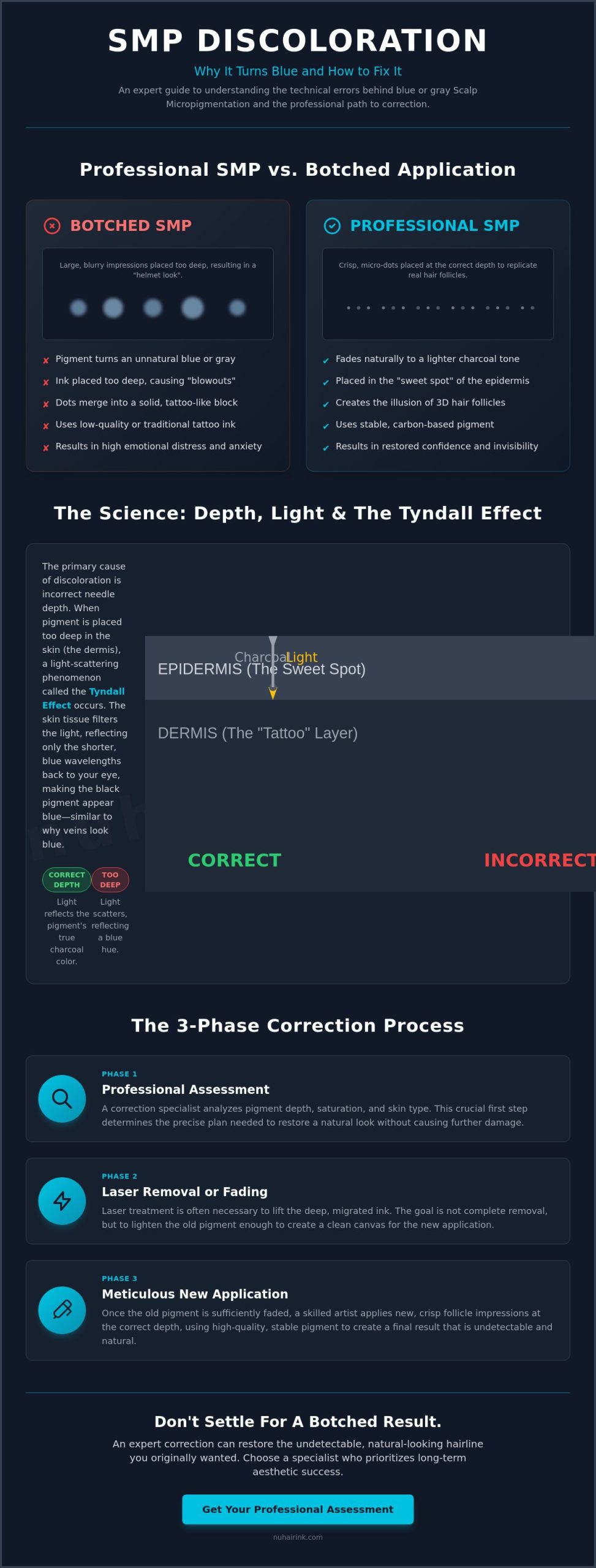
Healthy results should simply get lighter over the years, maintaining a neutral charcoal or soft black tone. Technical discoloration is different. It happens when the ink is placed too deep or the wrong pigment is used. Often, this blue tint comes with a “helmet look.” This occurs when the artist places dots too close together or uses too much pressure. The individual impressions bleed into one another, creating a solid, unnatural block of color that lacks the subtlety of a real hairline. This is a known issue in the industry, and fortunately, we have established protocols to correct it.
The “Tattoo Look” vs. Professional Scalp Micropigmentation
Traditional tattoo inks are often the culprit. These inks contain multiple constituent colors that can separate or shift as the body processes them. Professional pigments are typically carbon-based and designed to stay true to tone. If your artist used a standard tattoo machine or needles that were too large, the results often look like blurry, blueish blobs rather than sharp follicles. Migration happens when ink is pushed into the dermis, the tattoo layer, where it spreads and catches light differently, turning blue almost instantly. Authentic work requires specialized needles and a light touch to ensure every impression remains crisp and organic.
The Emotional Impact of a Botched Procedure
A botched procedure does more than change your appearance; it impacts your spirit. Many clients experience social withdrawal or intense anxiety after a poor treatment. At NuHair Ink, we approach every correction with deep empathy and clinical precision. We understand that your trust has been broken. We don’t just fix the ink; we help you reclaim your identity. Knowing what to do if smp turns blue is the first stage of your transformation. Don’t rush into a quick fix like adding more ink. That usually makes the saturation worse. Instead, we focus on a strategic plan to lift the old color and restore a look that is entirely organic and undetectable.
The Science of Discoloration: Depth, Pigment, and the Tyndall Effect
Understanding the physics of your skin is the first step in learning what to do if smp turns blue. This shift in color isn’t a mystery; it’s a predictable scientific reaction to poor technique. When light hits the skin, it has to travel through various layers before reflecting off the pigment. If that pigment is buried too deep, the light waves scatter. This creates a visual distortion that robs the treatment of its intended warmth and realism. It transforms a sharp, charcoal-toned follicle into a dull, cobalt smudge.
The primary culprit is a phenomenon called the Tyndall effect. The Tyndall effect is the physical process where light scatters through the skin’s density, causing pigments placed too deep to reflect only shorter, blue wavelengths back to the eye. This is why a vein looks blue even though blood is red. When a technician lacks the precision to stay in the upper layers of the skin, they inadvertently create this same optical illusion. The U.S. Food and Drug Administration (FDA) has highlighted various risks associated with tattoo pigments, including the potential for migration and color shifts when improper materials or methods are used.
Skin tone also plays a vital role in how pigment matures. Professionals use the Fitzpatrick scale to categorize skin types and determine the correct pigment dilution. If a technician fails to account for your specific undertones, the result can appear “cool” or blue almost immediately. If you’re currently facing this issue, the specialists at NuHair Ink can provide a meticulous analysis of your pigment depth to map out a restorative path.
Depth Matters: Why the Epidermis is the “Sweet Spot”
Scalp micropigmentation belongs in the upper dermis and lower epidermis, not the deep “tattoo layer” of the skin. When a needle penetrates too far, it hits a zone where the tissue is less stable and more saturated with fluids. This causes “blowouts,” where the ink spreads out like a drop of water on a paper towel. These enlarged, blurry dots are the first to turn blue because they are trapped under too much skin tissue. Precision is the only way to ensure the impressions remain crisp, organic, and true to color over time.
Pigment Quality and Migration
Cheap or multi-color inks are a significant risk factor. Traditional tattoo inks often use a blend of blue, green, and purple bases to achieve a “black” look. As your body’s immune system attempts to break down these foreign particles, smaller color molecules disappear first, often leaving behind a stubborn blue or green residue. Carbon-based pigments are the industry standard because they are stable and don’t break down into different hues. Even with high-quality ink, your body’s macrophages can move pigment particles if they are placed in the wrong layer, leading to a hazy, migrated appearance that requires professional correction to resolve what to do if smp turns blue.
Signs of Discolored SMP vs. Healthy Fading
Distinguishing between a natural aging process and a technical failure is essential for your peace of mind. Healthy fading is characterized by a gradual softening of the shade while maintaining a neutral, charcoal-like tone that mimics the look of a buzzed hair follicle. Unhealthy discoloration, on the other hand, involves a shift toward cool, unnatural hues like navy, cobalt, or even forest green. This change indicates that the integrity of the procedure has been compromised, often leaving you wondering what to do if smp turns blue.
Texture and edge definition provide the clearest clues to the health of your treatment. In a successful application, you should see distinct, crisp follicle replications that stand alone. When the pigment has migrated, these dots blur into one another, creating a solid wash of color that lacks any organic detail. High-quality carbon pigments resist this spread, but low-quality alternatives are more susceptible to the “Sun Factor.” UV exposure can accelerate the breakdown of unstable inks, turning a once-dark scalp into a murky gray. To understand the broader context of these issues, you can review FDA information on tattoo and permanent makeup risks, which highlights how unapproved additives or improper techniques can lead to unexpected color shifts and adverse outcomes.
Diagnosing Your Scalp: A Self-Assessment
Start by examining your hairline in different lighting environments. Natural sunlight often reveals the true blue or green undertones that indoor LED lights might hide. Look specifically for “migration clusters” where the ink appears to have pooled or smeared under the skin. If the individual impressions are no longer visible and your scalp has taken on a uniform, cool-toned appearance, you have your answer. If you’re unsure what to do if smp turns blue, the first step is always a professional consultation to determine if the pigment is salvageable or requires removal.
Why Some SMP Looks “Ashy” Instead of Blue
Not all discoloration is a botched job; sometimes it’s a matter of skin physiology. In dry climates like Sacramento, skin can become thicker or more calloused, which creates an “ashy” veil over the pigment. This is often a result of dry skin cells reflecting light, which is different from a deep-seated blue shift caused by poor technique. A faded session simply loses its intensity while maintaining its original hue, whereas a discolored session undergoes a chemical or optical shift toward an entirely different, unnatural color spectrum. Understanding this distinction helps you decide if you just need a moisture-focused skincare routine or a full corrective procedure.
Steps to Fix Blue Scalp Micropigmentation
Fixing a botched procedure requires a strategic, multi-phase plan rather than a quick fix. If you’re wondering what to do if smp turns blue, the answer starts with a professional assessment to determine the depth of the existing pigment. Simply adding more dark ink over a blue base is a mistake. It often results in a heavier, darker, and even more unnatural mess. A successful correction is a process of restoration, not just concealment.
The journey to a natural look follows a disciplined path designed to respect your skin’s biology:
- Step 1: Professional Assessment. We analyze the saturation and depth to see if the skin can safely hold more pigment or if removal is required.
- Step 2: Laser Removal. This is often the most critical stage to clear out deep, migrated ink that causes the blue tint.
- Step 3: Healing Time. Your scalp needs a period of rest to fully recover and settle before we introduce new work.
- Step 4: Color Correction. We use specialized warm-toned modifiers to neutralize any remaining cool or ashy hues.
- Step 5: Detail Restoration. Finally, we recreate individual follicle impressions with the precision and subtlety you expected the first time.
The Role of Laser Removal in SMP Correction
Laser technology has revolutionized how we handle botched work. Picosure or Q-switch lasers are the preferred tools because they target the pigment without damaging the surrounding tissue. Unlike traditional tattoo removal that might take ten sessions, SMP correction typically requires only 1 to 3 sessions because the pigment is shallower. A common fear is that the laser will destroy existing hair. These lasers specifically target the ink particles, leaving your natural hair follicles completely intact and safe.
Neutralization: The Art of Color Correction
Once the excess pigment is lifted, we focus on the nuances of color theory. We use specialized orange or warm-based pigments to cancel out the blue and gray tones. This creates a neutral canvas that looks like real hair again. It’s a delicate balance. If done incorrectly, the result looks muddy and dull. This is why you need a master artist who understands how pigment heals under the skin. To protect your new results and ensure the correction lasts, following a strict SMP Aftercare Guide is essential for long-term clarity.
If you are ready to move past the anxiety of a botched procedure and reclaim your confidence, the specialists at NuHair Ink are here to guide you through every step of this transformative correction. Understanding exactly what to do if smp turns blue is the first step toward a result you can finally trust.
Choosing an SMP Specialist for Correction in Sacramento
Correction work is significantly more demanding than a primary session. While a standard treatment involves a clean slate, correction requires navigating existing scar tissue, pigment migration, and depth inconsistencies. You’re looking for a technician who doesn’t just apply ink but understands the chemistry of what went wrong. When considering what to do if smp turns blue, your choice of artist is the most critical variable. You need a partner who values visual invisibility over a quick, heavy-handed fix. This isn’t just about covering up a mistake; it’s about a total aesthetic and psychological restoration.
A high-quality correction portfolio should look different from a standard one. Don’t just look for crisp hairlines on fresh skin. Look for “before and after” cases involving laser removal or significant color shifts. These photos prove the artist can manage complex variables and skin that has already been through trauma. At NuHair Ink, we prioritize precision and patience above all else. Our approach is bespoke, designed specifically for the unique anatomy of your scalp and the specific challenges of your previous procedure. Being a local specialist in Roseville and Sacramento allows us to provide the consistent, long-term follow-up that complex correction work demands. You deserve a technician who is available for every phase of your transformation.
Questions to Ask Your Correction Artist
Ask direct questions to gauge their technical precision and clinical authority. How do they plan to handle pigment migration and depth issues specifically? Do they have a proven track record working with laser-treated skin? A meticulous specialist will be able to show you a case similar to yours that they successfully restored. Transparency is a sign of expertise. If an artist can’t explain the “why” behind their correction strategy, they aren’t the right fit for your journey. You’re searching for a partner, not just a service provider.
Your Journey Back to Confidence
Restoring your look is a marathon, not a sprint. A full correction often takes several months to allow for proper healing and pigment settling between sessions. This methodical pace is what ensures the final result appears entirely organic. Our commitment at NuHair Ink is to provide results that make the original mistake vanish. You can see our Ultimate Guide to SMP for Men to understand the standard of excellence we aim for in every restoration. We don’t just offer a service; we offer a life-altering outcome that replaces regret with self-assurance. If you’re ready to leave the hats behind and reclaim your identity, schedule your correction consultation at NuHair Ink today and start your path back to a natural, realistic look.
Reclaim Your Natural Look and Confidence
You now understand that a blue or gray tint isn’t a permanent mark of failure; it’s a technical challenge that requires a specialist’s touch. By identifying the science behind the Tyndall effect and the necessity of proper pigment depth, you’ve taken the first step toward restoration. A successful correction is a journey of precision and patience, moving from professional assessment to the meticulous recreation of organic follicle impressions. Knowing exactly what to do if smp turns blue empowers you to stop hiding and start healing.
NuHair Ink is Sacramento and Roseville’s trusted specialist for complex scalp micropigmentation corrections and scar camouflage. We prioritize visual invisibility and artisanal craftsmanship to ensure your results look entirely organic. You don’t have to settle for an unnatural appearance or live with the regret of a botched procedure. Our team is here to act as your empathetic ally in this transformative process. Your path to a realistic, undetectable hairline starts here.
Restore Your Confidence. Book a Correction Consultation and rediscover the self-assurance you deserve.
Frequently Asked Questions
Is blue scalp micropigmentation permanent?
Blue scalp micropigmentation isn’t permanent, though it requires a specialized approach to resolve. We use advanced laser technology or meticulous color neutralization to lift the unwanted tint and restore a natural appearance. This process allows us to clear the canvas before applying new, organic follicle impressions. You don’t have to live with a botched result forever; professional correction can fully reclaim your look.
Can I just tattoo over the blue ink with a skin-colored pigment?
Using skin-toned pigments to cover blue ink is a mistake you must avoid. These pigments are made of titanium dioxide, which can turn yellow or chalky as it ages. More importantly, they act like a shield that prevents lasers from reaching the blue ink underneath if you need removal later. If you’re deciding what to do if smp turns blue, focusing on removal or neutralization is a much safer, more effective strategy.
How much does SMP correction cost in Sacramento?
Correction costs in the Sacramento area depend entirely on the complexity of your specific case. We evaluate factors like the depth of the previous ink, the level of saturation, and whether laser sessions are necessary to clear the skin. Every head is unique, so a personalized assessment is the only way to determine the scope of work required to restore your natural look. Check with your local specialist for a detailed review of your needs.
Will laser removal cause my hair to stop growing?
Laser removal for scalp micropigmentation won’t stop your natural hair from growing. The laser energy is tuned to target the specific wavelength of the ink particles, not the biological structures of your hair follicles which sit deeper in the skin. Your existing hair remains safe while the deep, blue pigment is broken down by your body’s natural processes. It’s a safe and effective way to prepare for a fresh, professional application.
Why did my SMP turn blue after two years but looked fine at first?
Discoloration that appears years later is often due to pigment migration or the Tyndall effect. As the ink particles slowly settle deeper into the dermis over time, the way light reflects off them changes, often revealing cool blue or gray tones. This is a common result when an artist uses traditional tattoo ink or incorrect needle depth. Long term visual authenticity depends on the precision of the initial application.
How many sessions does it take to fix discolored SMP?
Fixing discolored work typically requires between three and six total sessions depending on the severity. This usually includes one to three laser treatments to lift the old, deep ink, followed by several sessions of precision pigment application to recreate the follicle look. We move at a pace that respects your skin’s healing process. This methodical approach ensures the final result is crisp, organic, and undetectable.
Is it possible to fix blue SMP without laser removal?
Neutralization is possible without laser if the blue tint is very light and the skin isn’t oversaturated with old ink. We use warm, orange-based modifiers to balance out the cool tones and create a neutral charcoal base. However, if the ink is deep or the dots have blurred together into a solid mass, laser removal is the only way to achieve a truly organic finish. A professional assessment will determine which path is right for you.
What is the best pigment to prevent SMP from turning blue?
Carbon-based pigments are the industry standard for preventing unnatural color shifts. These specialized pigments are designed to fade into a neutral charcoal shade rather than breaking down into blue or green bases like traditional tattoo inks. When you’re researching what to do if smp turns blue, ensuring your next artist uses high-quality, stable pigments is the best way to protect your investment and ensure a realistic result.